
Key Takeaways
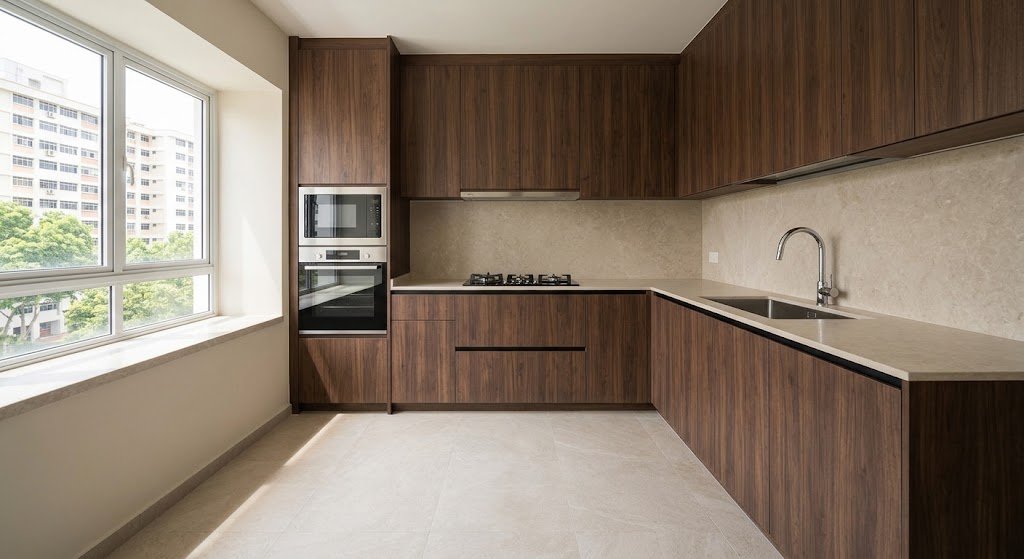
Sintered stone countertops are made from natural minerals that are compressed under high pressure, then fired at high temperatures to create a dense, non-porous and scratch-resistant surface.
Successful renovations depend heavily on accurate cabinet measurements, careful site preparation, and close coordination with your project team.
Professional installation ensures safe slab transport, precise dry fitting, secure anchoring, and clean finishing touches.
Maintaining your new stone surfaces is effortless with simple daily cleaning using mild soap, requiring zero sealing and minimal long-term upkeep.
When homeowners here talk to us about kitchen or bathroom makeovers, sintered stone countertops always crop up. But if you’ve got a renovation coming up, you’re probably wondering how the work actually happens.
We get that clean, long-lasting setup done through three main stages. First, we take exact site dimensions at your place, then we craft everything carefully inside the shop, and finally we install the piece gently on site. Nothing gets skipped, whether it is measuring up front, fabricating, coordinating timing, bringing the piece over, fitting it down, or running final checks. Here is a look at the full process of sintered stone installation in Singapore so you know what lies ahead.
Why Choose Sintered Stone Countertops?
So, what is a sintered stone countertop anyway? It is a manufactured surface made from natural minerals compressed under high pressure, then fired at high temperatures to create a dense, non-porous surface. The process takes a cue from nature, with carefully controlled production conditions. Its durability makes it well suited to kitchens and bathrooms in Singapore.
The benefits are hard to ignore. They resist scratches, block out tough stains, handle high heat effortlessly, and require almost zero maintenance, giving you a clean, sleek design well before installation day. From cutting up ingredients for a fast bite to cleaning up after a full house of guests, the surface stands up to it all.
Preparing for Sintered Stone Countertop Installation
Before any heavy lifting begins, planning takes centre stage. We usually sit down with your appointed interior designer, main contractor, or project team to align all installation requirements. Getting everyone aligned early stops surprises later in the schedule.
Getting ready for fitting day means measuring your cabinets, locking in sink and hob specs, fabricating the slab, checking site access, and fixing a delivery date. Just remember, full renovation works and simple countertop replacements don't always follow the exact same steps.
Taking Accurate Measurements
Precise measurements are everything when it comes to custom fabrication. Our team will measure the cabinets your countertop will sit on. It will be customised to it.
If you are doing a full height backsplash (typically using the same material as the countertop), we will also measure the wall and look out for any additional customisation needed. An example would be like power plug or socket positioning. This ensures every single cutout and edge aligns with your kitchen layout.
Removing Existing Countertops
If you are replacing an old countertop, its removal must be arranged before installing the new countertop. Clearing out the old top lets us check the exposed space and underlying cabinets properly before fitting starts.
Finding structural issues early stops big headaches before they even start. Inspecting the exposed frame right after removal guarantees a solid base for the fresh top.
Preparing Cabinets and Support Structures
Your base cabinets must be completely solid. They need to be flat, steady, and easily handle the weight of the countertop. As a rule, Bellus avoids modifying your existing cabinets since altering them can lead to unexpected problems.
However, installers may reinforce cabinetry if necessary. Any necessary alteration should only proceed after discussion and coordination with the relevant contractor or project team.
Protecting the Installation Area
Things get messy quickly during any renovation. We make sure to shield your floors, walls, and nearby furniture so nothing gets damaged while carrying and fitting the material.
Please clear the room and pathways ahead of time. Giving our installers a completely open workspace keeps everyone safe and gets the fitting done much faster.
What to Expect on Installation Day
On installation day, here’s what happens. Let's look at the installation process from slab delivery to final handover, including site preparation, safe slab handling, installation steps, finishing touches, and final inspection.
Delivery and Handling
Slabs are heavy. Carrying them into a house takes serious care because a bad drop or bump ruins the piece before we even start. Our delivery crew takes their time moving each piece through your property so nothing gets damaged.
Dry Fitting and Alignment
Before applying glue, we test the fit. Dropping the piece onto the cabinets shows us exactly where your walls lean or bow. We may trim or adjust right there so everything sits snug.
Preparing Openings for Sinks and Hobs
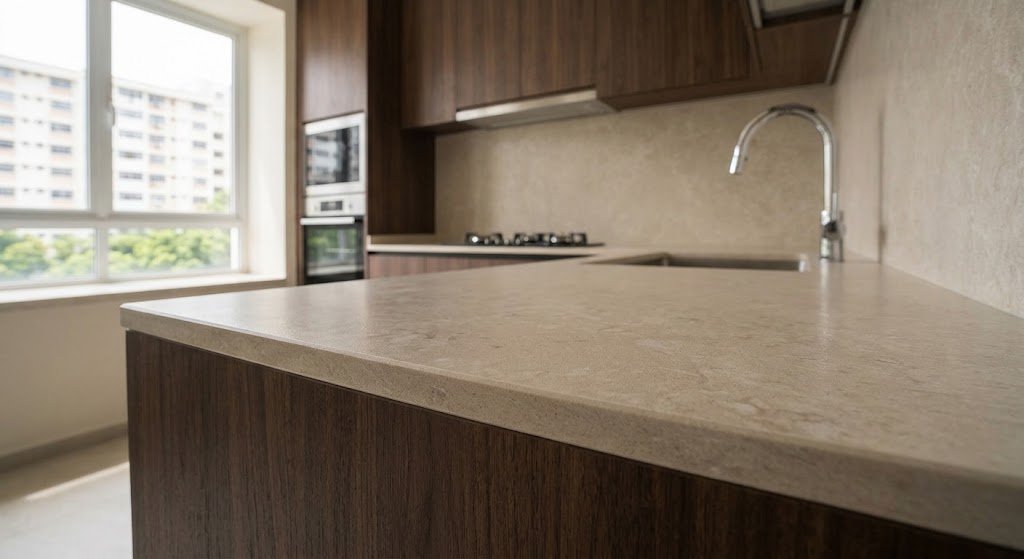
We measure your sink and hob cutouts during the initial site visit so the factory cuts them before delivery. Cutting stone on site is risky and may lead to cracks, so we avoid on-site drilling unless there's no other choice.
Securing the Countertop
When alignment checks out, we glue the top down and lock it into the base support. Stone this heavy gives you zero margin for error. We drop shims under low spots, re-check the level across the joints, and press it firmly into place.
Finishing Touches
We fill the joints, wipe the stone down, and check the edges as part of the finishing process. You can't rush the end of a job. These final touches help bring the installation together, ready for everyday use.
Final Inspection and Handover
Our installers check the countertop's alignment, fittings, joints, edges, and overall finish. Protective covering may be applied where needed to help safeguard the installed surfaces during subsequent renovation works.
We usually hand over the finished work to your interior designer or main contractor, who'll arrange for the plumbers, electricians, and other trades to come in.
How Long Does Sintered Stone Countertop Installation Take?
Time's always tight when you're doing up your home. How fast we get things done depends on your kitchen layout, the countertop size, edge profiles, cut-outs, and access to your unit. Straightforward countertop installations are usually quick to complete, while those with multiple joints or full-height backsplashes may take longer for careful alignment and finishing.
When planning a sintered stone installation in Singapore, your interior designer or main contractor coordinates the installation schedule with our team. Where possible, installation is arranged after major carpentry works are complete to help reduce the risk of accidental damage to your new countertop.
Caring for Your Sintered Stone Countertop After Installation
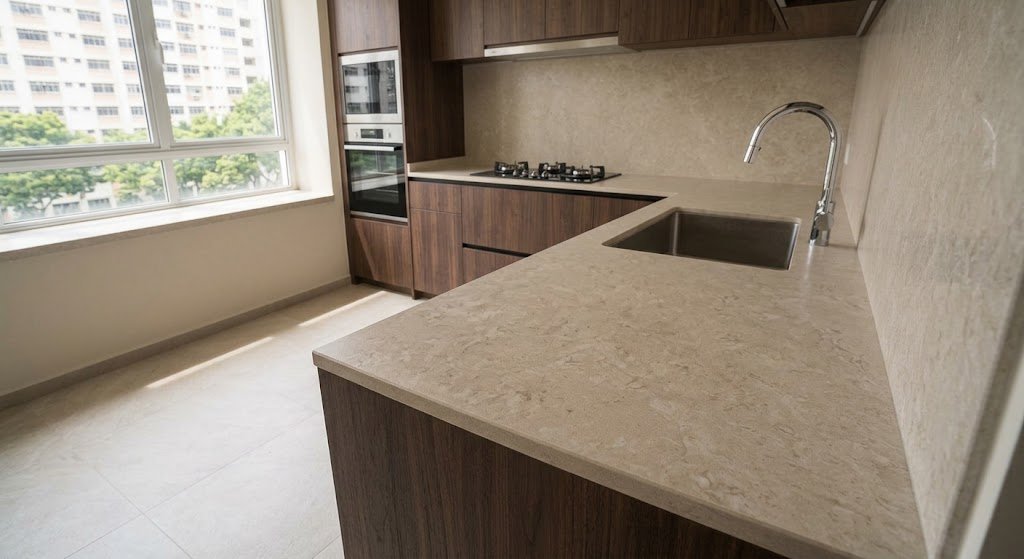
A bit of simple care goes a long way in keeping your top spotless and durable for the long run. Good news is you won't need any special kit or fancy gear to keep your surfaces looking brand new.
Daily Cleaning
Just grab a soft cloth with simple soap and water to clear off daily messes. Wipe spills up quickly to keep stubborn marks at bay. Skip abrasive products, scouring pads, or harsh chemicals that risk dulling the finish.
Preventing Damage
Chopping boards are still a great idea despite sintered stone being extremely durable. Avoid heavy knocks near vulnerable edges and corners. The material handles high heat easily, though trivets help protect nearby joinery and surfaces.
Long-Term Maintenance
Unlike other materials, sintered stone requires no sealing at all. Routine inspections help make sure your joints and edges remain neat. Because it doesn’t shift or warp, your counters will stay flat and level over decades.
Why Professional Installation Matters
To get the absolute best results, expert installation is a must. Professional installers handle precise cut-outs, accurate measurements, and proper support to deliver a flawless, seamless finish.
Cut corners on fitting, and you will likely face poor support beneath heavy loads along with uneven joints. A proper installation protects your countertop’s overall appearance and helps it last much longer.
Conclusion
Home renovation ought to be an exciting adventure. Understanding every step before, during, and after fitting keeps you firmly in the driver’s seat. Getting professional installation ensures everything goes smoothly while delivering a long-lasting countertop.
Are you planning a kitchen upgrade or bath remodel? Getting in touch early makes a huge difference, so reach out to Bellus for expert advice or a consultation today.
Frequently Asked Question
-
It is best to wait until the adhesives fully cure, usually 24 hours, before placing heavy items on your new surface.
-
Pricing varies based on size, slab, edge profiles and complexity, so requesting a custom quote is recommended.
-
Contact Bellus immediately so our team can assess the damage and provide professional repair or touch-up solutions.
-
Sintered stone handles heat and UV better, so it suits outdoor kitchens and sunlit spaces. Quartz offers a wider range of consistent patterns and often costs less. Which one is right depends on where it’s going and how you cook, something our team can walk you through at the showroom.
-
Bellus works closely with your appointed interior designer or contractor to coordinate measurements, delivery, and handover seamlessly.
Ready to Upgrade Your Kitchen or Bathroom with a Premium Sintered Stone Countertop?
Whether you're renovating your kitchen or designing a new space, our team is here to bring your vision to life.
