
Quartz vs Granite Countertops: Which is Better for Your Modern Kitchens
Key Takeaways
Compare granite and quartz across durability, heat resistance, maintenance, appearance, and everyday kitchen use.
Granite brings natural variation from slab to slab, while quartz offers a more consistent, engineered look.
Sealing is an important maintenance consideration for some granite, while quartz generally does not need sealing.
Cost depends on more than the material itself, including slab choice, size, thickness, fabrication, cut-outs, edges, and installation.
Introduction to Kitchen Countertops
Doing up a kitchen is a pretty big call, especially if you hope your countertop will stay solid for many years. Given that quartz and granite supply wonderful durability, pleasant style, and functional advantages, choosing either can cause some serious confusion.
That is where quartz vs granite becomes important. The right option relies entirely on your personal needs, from cleaning and wear-and-tear to appearance and cost. Let us check out the main differences so you can decide with confidence.
Overview of Granite Countertops
Formed from elements like quartz and feldspar, granite functions as a tough natural stone mined straight from the earth. Because every single granite slab features completely different veins, your granite countertops always boast a raw, organic look. Expect to slap on a seal depending on the material, otherwise your granite might just absorb every liquid.
Overview of Quartz Countertops
Pigment, resin, and quartz minerals are put together to manufacture quartz countertops out of engineered stone. You will enjoy a much steadier layout of tones and visual lines than what Mother Nature provides. Routine upkeep is dead simple because quartz is non-porous, meaning it generally does not need sealing.
Granite vs Quartz: Durability, Heat, and Everyday Performance
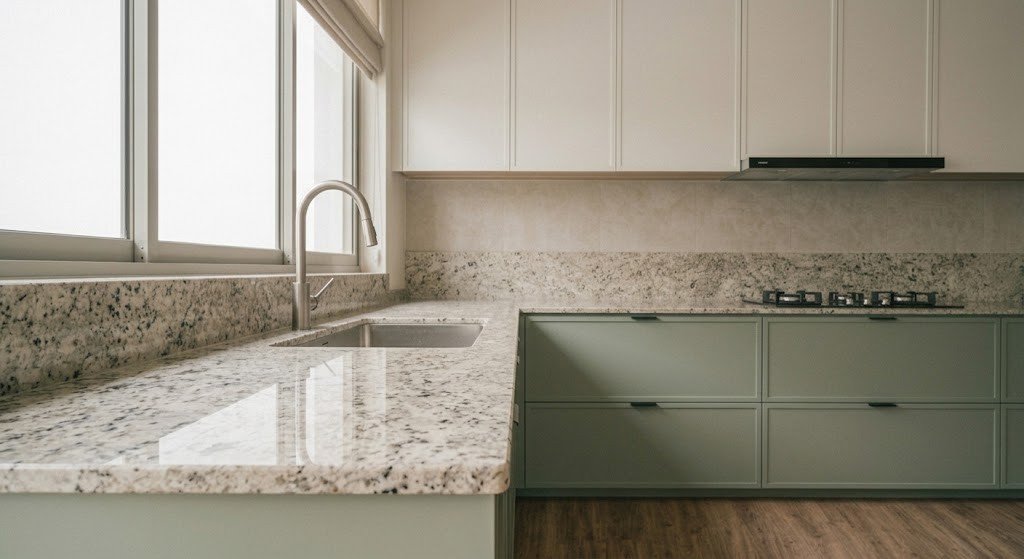
Granite handles heat well, but needs sealing to resist liquids. Quartz needs no sealing, but direct heat can damage its resin. Both resist everyday scratches and stains, and both can chip at the edges.
Material Composition
Granite is natural stone. Earth yields heavy boulders that get cut straight into slabs, showing random mineral streaks. Quartz countertops skip the earth route, manufactured instead by blending crushed stones with resin and colour pigments.
That composition affects more than appearance. Natural granite has natural variation, while engineered stone can offer a much more controlled look. It also means the care requirements are different.
Unlike quartz which stays entirely non-porous, granite absorbs liquids differently based on its natural porosity, making regular seal applications necessary for certain slabs.
Everyday Durability and Heat Resistance
Both surfaces stand up fine to regular cooking tasks. People have trusted granite for heavy use over decades, and the Natural Stone Institute calls it tough and heat-safe. Their data shows granite usually handles temperatures up to 250°C, though you still want to avoid harsh localised heat that cancracking.
Quartz also handles everyday kitchen use well. Consumer Reports' 2025 testing included hot pots, spills, knives, and other stresses when evaluating countertop materials.
Still, good kitchen habits matter. Dropping a blazing hot pan straight onto bare stone is asking for trouble when thermal shock sets in. Use a trivet or heat pad to save yourself a massive repair headache. If heat is your top concern, sintered stone is also worth comparing.
Impact, Scratching, and Chipping
Dense mineral structures let granite shrug off scratches easily, and quartz matches that toughness with high resilience against routine friction. But edges, corners, sink cut-outs, and other exposed areas deserve extra care. Consumer Reports notes that both quartz and granite can chip at edges and corners, particularly after strong impact, and professional repair may be needed.
A cutting board remains good practice, not because the countertop is fragile, but because knives belong on cutting boards. The same goes for dropping heavy cookware. Basic care protects the surface and helps it stay looking good for years.
Granite Countertops: Features and Benefits
Granite countertops feature an asset engineered alternatives can never duplicate: complete natural variation. Because every granite slab features a distinct mineral layout, your setup gets an individual identity tailored for any contemporary kitchen.
Practicality is another massive perk for active cookspaces, thanks to heavy-duty durability and solid resistance against daily wear. It shines brightest whenever your layout aims for a bold, raw focal point rather than a flat, uniform aesthetic.
Still, upkeep is something you have to factor in. Porosity levels shift from one piece to the next, meaning the decision to apply a seal depends entirely on your chosen stone. As the Natural Stone Institute points out, sealing creates a strong defense against stains instead of making the material entirely bulletproof.
Cost of Granite Countertops
Pricing can change based on the rarity and colour of the stone, the thickness and dimensions of the slab, the amount of material required, the fabrication work, and the installation. More complex designs can also increase the amount of cutting and finishing required.
The same principle applies when comparing countertop materials generally. Consumer Reports recommends looking at the material cost together with installation and specifying details such as thickness, finish, cut-outs, edge treatment, backsplash work, and removal of an old counter when reviewing an estimate.
So, when comparing granite versus quartz, compare complete project quotes, not just the raw slab.
Sealing and Maintenance Requirements
Treating stone isn't a blanket requirement across every installation. The Natural Stone Institute mentions that lots of granite countertops perform reliably bare, though specific slabs take advantage of sealing to fend off cooking spills and dampness.
Looking after a properly sealed granite counter takes very little effort. Clear away wet messes promptly, stick to mild dish soap, and review whatever care instructions your supplier provided.
The rule is simple: seal when needed, and remember extra sealant doesn't mean extra protection.
Stain Resistance of Granite
Real stone lacks factory-built invincibility against discolouration. A given slab's defense against stains rests entirely on its natural porosity and whether it received a protective treatment.
If oils, coffee, or dark sauces pool and sit too long, they can penetrate the material, hit-and-miss depending on how dense the mineral is. The Natural Stone Institute clarifies that a protective coating enhances stain resistance instead of making the surface totally impervious.
That makes quick cleanup a good habit. Wipe the spill. Dry the surface. Then get back to cooking.
Quartz Countertops: Features and Benefits
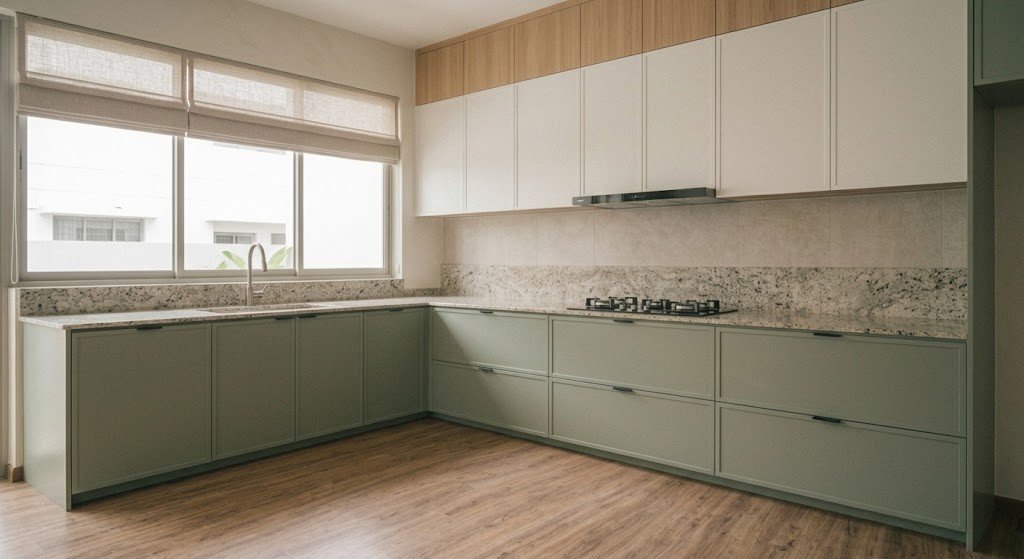
Renovated cooking areas often incorporate quartz countertops to balance a uniform style with easy daily upkeep. Thanks to engineered manufacturing, you get access to a massive range of colours and intricate veining that mirrors organic rock.
That non-porous build changes the game for daily maintenance. A standard quartz countertop stays entirely sealed by design, meaning you can skip routine seal applications completely while handling messes with basic soap and water.
Naturally, they do have weaknesses. Sudden high heat and harsh chemicals can cause lasting harm to the resin. Respecting the provided care instructions is the best way to preserve your investment over time.
Cost of Quartz Countertops
The total bill relies heavily on elements like brand choice, colour palettes, visual patterns, slab dimensions, physical depth, edge profiles, utility cut-outs, and skilled installation work. Expanded surfaces or ornate designs naturally demand extra raw material and intensive labour.
This explains why two quartz countertop estimates vary wildly even within identical kitchen spaces. Look closely at the breakdown rather than just the bottom line. The cost of your quartz countertop depends on its thickness, size, cut-outs, edge profile and any additional fabrication or installation work needed.
Maintenance and Care
The biggest practical difference between the two is upkeep. Because engineered slabs feature a non-porous build, a standard quartz countertop requires no routine seal application for stain defense. Daily upkeep is remarkably simple: wipe clean your kitchen counters consistently and mop up accidental wet messes right away. Avoid heavy scrub pads or strong chemical solutions unless your official care instructions clear them for use.
Quartz is wonderfully low-stress, but easy maintenance should never be mistaken for complete neglect.
Stain Resistance of Quartz
Quartz handles everyday spills well because its engineered structure is non-porous. Consumer Reports notes that quartz performed strongly in testing involving spills and that it does not need to be sealed for stain protection.
Still, no countertop materials should be treated as completely stain-proof. Prompt cleaning is recommended especially for strongly pigmented foods and drinks.
So the practical rule for a quartz countertop in any busy kitchen is easy. Wipe spills, use the right cleaning products and avoid leaving messes to become tomorrow's problem.
Choosing the Right Countertop for Your Kitchen
Selecting the ideal surface for your kitchen boils down to your cooking habits and personal priorities.
Take time to evaluate your cooking frequency, how your granite and quartz countertops handle thermal stress and prep work, how much maintenance you want to manage and your financial limits.
Traditional granite slab options suit buyers who value natural materials, unique organic movement and classic stone character. On the flip side, Quartz suits those who want consistent patterns and an easy, non-porous surface.
Neither approach is incorrect. Because the differences between quartz and granite span both daily performance and style your final choice among various countertop materials should support how your kitchen operates.
Which Looks More Natural?
Granite is pure rock with random mineral patterns, meaning no two slabs match. You get everything from faint movement to deep veining.
Quartz can reproduce the visual character of natural materials while offering more consistency between areas. Consumer Reports mentions that quartz does a great job copying marble and granite looks, even if the factory build occasionally results in a pattern that lacks true randomness.
For a kitchen where organic variation is the whole point, granite is the real deal. But for a planned countertop design with a wide range of colours that match across the room, quartz is easier to line up.
Final Thoughts
Neither quartz and granite suits every home.
Granite handles hot pans and gives you real rock, but quartz is lazier to clean. Some granite needs sealing, quartz doesn't.
Both promise great durability once installed correctly.
Don't just look at the slab price. Cuts and labour add up. Both look great in a kitchen, pick what fits your routine.
Frequently Asked Question
-
Both are durable choices for kitchen use. Granite offers natural variation and strong heat resistance, while quartz offers a non-porous surface and lower maintenance.
-
Not always. Pricing varies by slab, colour, thickness, size, fabrication, and installation, so compare complete quotations rather than assuming one material always costs more.
-
The surface may become more vulnerable to moisture and staining, depending on the stone. Sealing improves stain resistance but does not make granite stain-proof.
-
Yes, some damage can be professionally repaired. Edges and corners can chip after strong impact, and professional repair may be required.
-
Yes. Bellus supplies, fabricates and installs both granite and quartz from our 60,000 sqft Woodlands facility, so you deal with one team from slab selection to installation.
Find Your Perfect Kitchen Surface
View granite and quartz slabs up close at the Bellus showroom and see which one fits your kitchen best.
